From Marcos to Aquino regime, soldiers torch Lumad woman’s home
Many times over, the soldiers came to her village. Many times over, she and fellow villagers were forced to leave. Many times over, they burned her home.
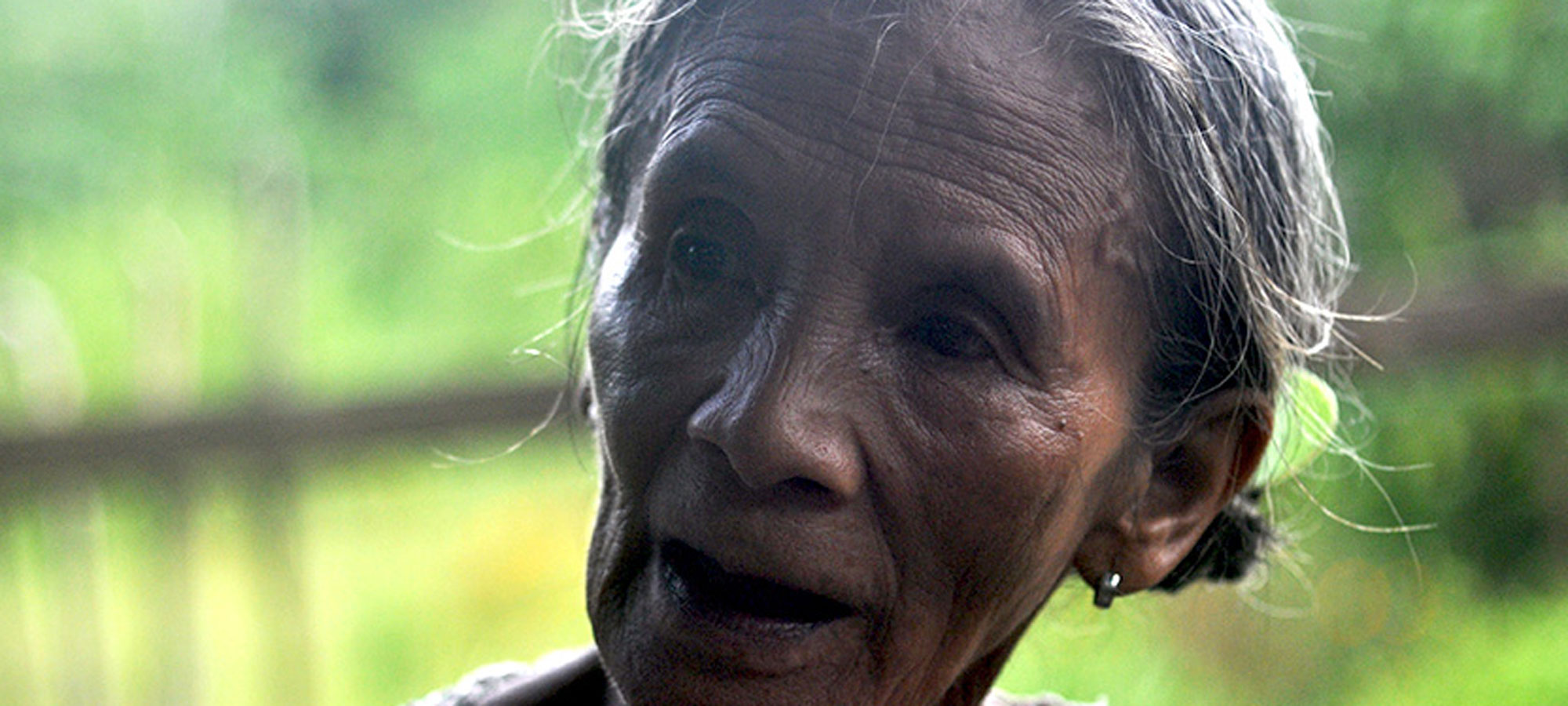

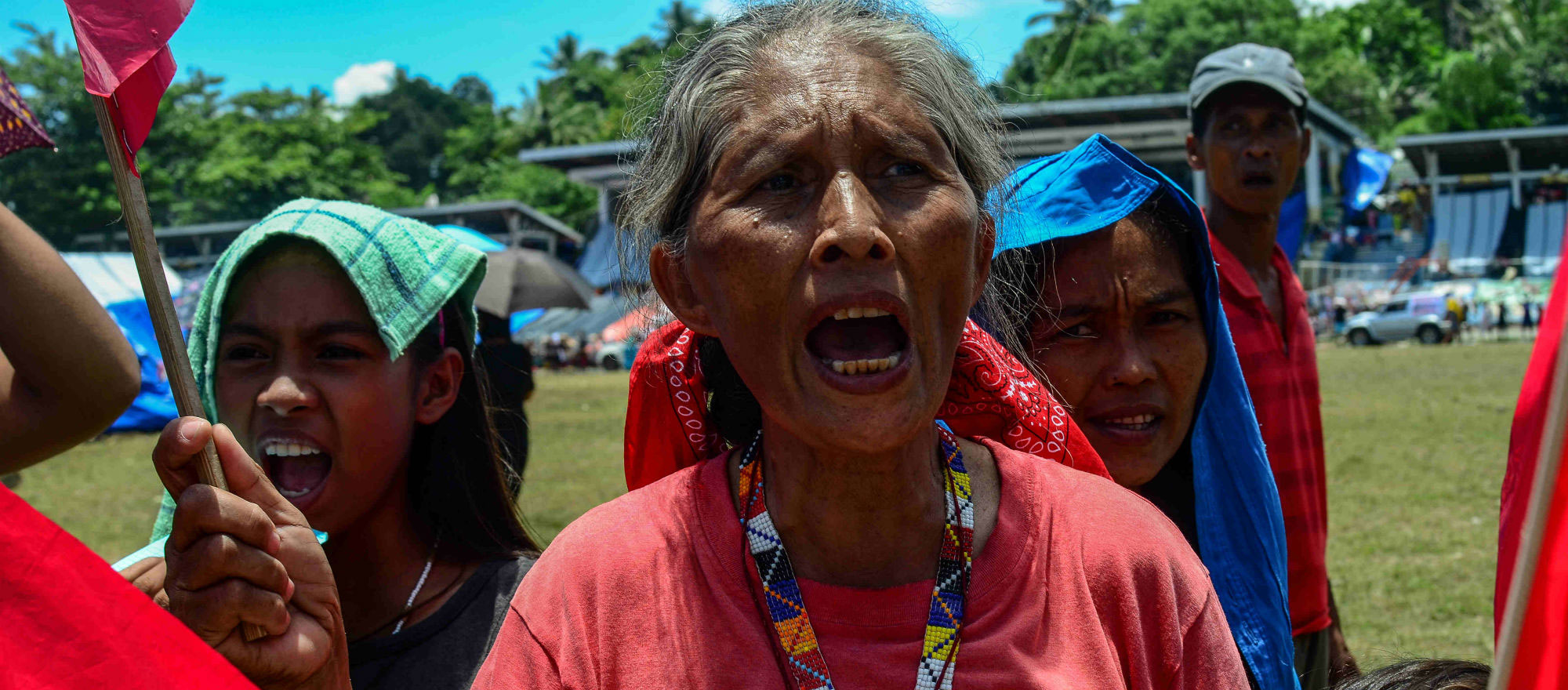
Ashes were all that were left of the house of Ceriaca Siscon, 80, when she recently returned to their village in Sitio Magkahunao, Brgy. Buhisan in San Agustin town of Surigao del Sur.
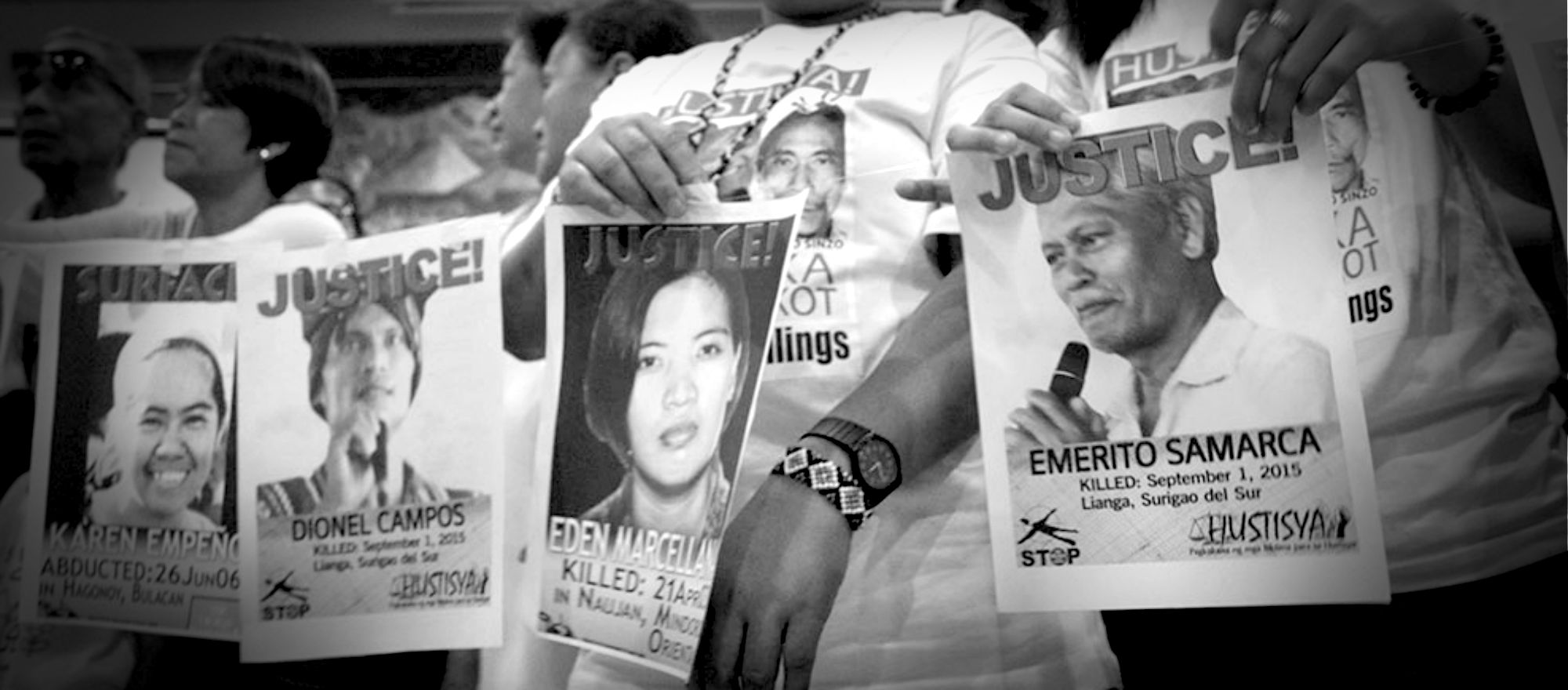
She was one of the Lumad residents who left with her fellow villagers after the killings in the nearby town of Lianga happened.
“No one witnessed who did the burning. I was in evacuation. But of course, the military was here and had a (military) operation. So, for sure, the military did it,” said Siscon. She had no idea why the soldiers burned her house.
This atrocity reminded her of the year 1985, when soldiers purportedly first burned her house.
Again and again
That year, Siscon and her fellow villagers evacuated from their village because of heavy military presence that threatened their lives. In evacuation centers, they did not eat rice for three months. They survived by eating whatever food were available, like fruits and root crops.
It was in 1997 when military troops almost kidnapped her husband. She physically prevented the soldiers from taking her husband. “A soldier put the gun’s barrel inside my mouth. I dared him to shoot,” recounted Siscon.
After that incident, her two daughters, Flor and Margie Cazil, who witnessed it, were forced to leave for Manila. Siscon never heard from them again. She hopes that one day she may see her daughters again.

In 2005, when the Arroyo administration embarked on the bloody counter-insurgency program Oplan Bantay Laya II, three of Siscon’s sons were forcibly taken in a military operation. They were never heard of again.
For the next years, government troops continued their military operations in her village. Siscon remembered an incident when she once told a soldier who passed by her house to put down his weapon. She said she even challenged the soldier to a fist fight.
Neighbor’s fate
Siscon’s other neighbor, Nick Roleda, 55, also experienced a similar fate. After the Lianga killings, he evacuated with the other villagers.
Recently, he returned to the village. Like Siscon’s house, his house, too, was burned down. Roleda reported the incident to the local police. No official word yet on when the police will investigate on the cases.
Roleda said he lost about P1.5 Million-worth of properties. His truck that he used for work was burned, along with 15 sacks of rice, television, a supply of groceries for three months, and a house that his family endeavored to build for 40 years.
“After we saw what was left of the house, my wife was devastated and said she wished that she was burned with it. It was painful. We lost everything we worked for so hard in 40 years,” said Roleda.
Roleda said he has sought help from local officials, church, and relatives in order to survive. He does not know how long will they be staying in the evacuation center. He also does not know if he will be able to rebuild their lives after this.

“I can’t really understand why those who are living peacefully are the ones being attacked,” said Roleda.
Not yet
Still seeking refuge in evacuation centers, Siscon and Roleda have nowhere to go. They still find their communities unsafe as the killers of Lianga remain at large.
For them to be able to return home safely, Lumad leaders said the paramilitary groups that the military created must be disbanded. They also demanded that perpetrators be brought to justice, and that militarization in Lumad communities be halted.
“Our problems began when the military came. If the military did not sow terror in our place, the people will be just stay there to live and will not find any need to evacuate,” added Ciriaca.