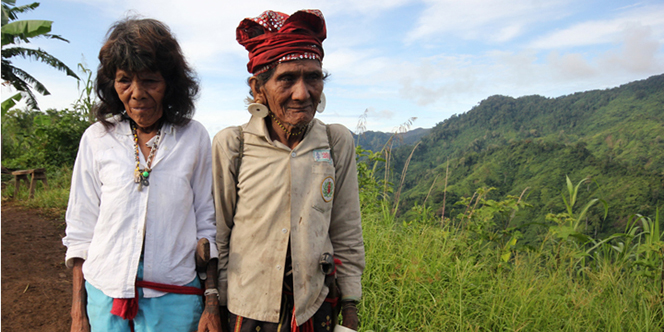
Photojournalist Boy Bagwis, on May 13 to 15, joined the national fact-finding and humanitarian mission to investigate the displacement of more than a thousand Manobos in Talaingod, Davao del Norte due to heavy military presence and intimidation. The Talaingod Manobos, according to anthropologists, are one of the least accessible (to lowlanders) indigenous groups in Mindanao, […]
Photojournalist Boy Bagwis, on May 13 to 15, joined the national fact-finding and humanitarian mission to investigate the displacement of more than a thousand Manobos in Talaingod, Davao del Norte due to heavy military presence and intimidation. The Talaingod Manobos, according to anthropologists, are one of the least accessible (to lowlanders) indigenous groups in Mindanao, and have been among the most vigilant and organized in preserving their indigenous culture and defending their ancestral domain from foreign intrusion and exploitation. During the mid-90s, Talaingod Manobos successfully drove away one of the biggest logging companies in Mindanao that threatened Talaingod and Pantaron Range, one of the few remaining virgin rainforests in the country. This indigenous community, with some help from indigenous rights advocates and people’s organizations, has developed its own local economy, maintaining communal farms and mechanized milling, among others. The mission was conducted a week after more than a thousand Manobos returned to Talaingod after the military agreed to withdraw from their communities.
An an elder Manobo, Ubunay Botod Manlaon, shows off her tribal tattoos that symbolized her esteemed status in their tribe. On March 7 this year, aUbunay was forced to act as the soldiers’ guide in the jungle for a week. She was manhandled and subjected to sexual assault, before being able to escape. Ubunay’s abduction compelled many Manobos to evacuate from their communities. Boy BagwisA Manobo evacuee returns to her home and harvests root crops in Sitio Lasakan, Talaingod, after a month of seeking sanctuary in Davao City. Boy BagwisThousands of Manobo Lumads fled from heavy militarization in 11 villages in Talaingod, Davao del Norte after a series of aerial bombings and harassment by soldiers. Boy BagwisA Manobo mother stands in front of her infant daughter’s casket while her husband sits in grief. The infant reportedly died of measles. Having just arrived in their community from evacution, many had no food and medicine, resulting in the deaths of several children. Boy BagwisManobo children compose the majority of the population of tribal communities in Talaingod. Boy BagwisA Manobo family in Sitio Bayabas, Talaingod says that they lost belongings after military elements occupied their house. In front of them is a pot, where they say soldiers even defecated. Boy Bagwis“The military accuses us of being New People’s Army supporters. But the truth is we are only fighting for our rights.” Boy BagwisSome of the Talaingod indigenous women with their tribal garb. Boy BagwisManobo women were part of the pangayaw, or tribal war, declared against the logging company Alcantara and Sons during the 90s. Boy BagwisManobo tribal leaders led by Datu Guibang Apoga declare that they want peace. But if corporations and the government take away their land, the tribal leaders say they will fight with their native weapons. From left: Datu Tungig, Guibang, Doluman and Sunpa. Datu Guibang Apoga was the foremost Talaingod Manobo leader who led the pangayaw during the 90s. The military declared him an outlaw. But Apoga says he was merely protecting their ancestral domain. Boy Bagwis
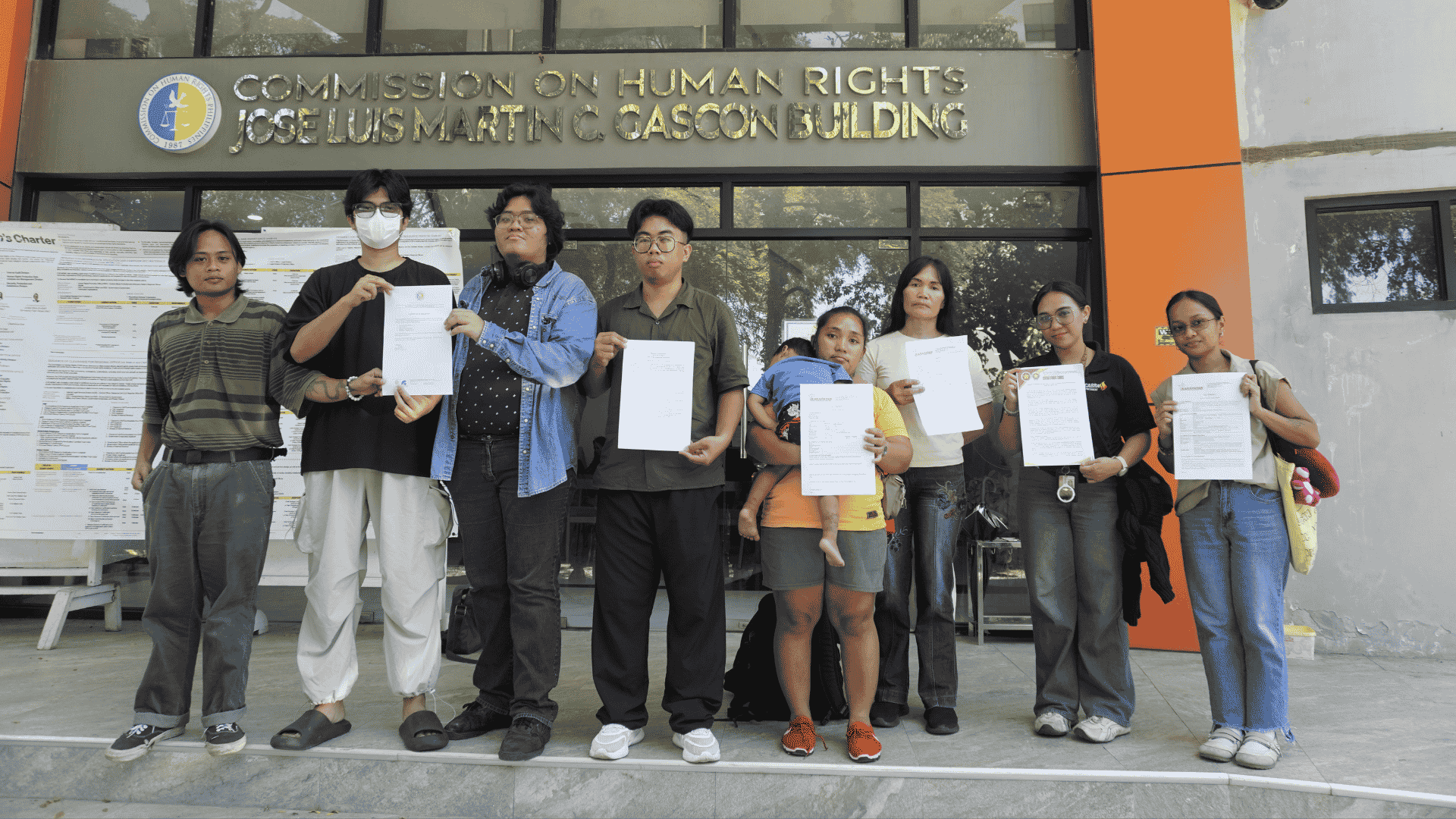
Nagsampa ng reklamo sa Commission on Human Rights ang mga residente at grupo mula sa Kamaynilaan kaugnay ng red-tagging, harassment at iba pang paglabag sa mga karapatang pantao.
Posibleng pinatay nang walang kalaban-laban ang limang sibilyang biktima ng masaker sa Toboso, Negros Occidental ayon sa paunang resulta ng autopsy ng forensic pathologist na si Dr. Raquel Fortun sa mga labi.
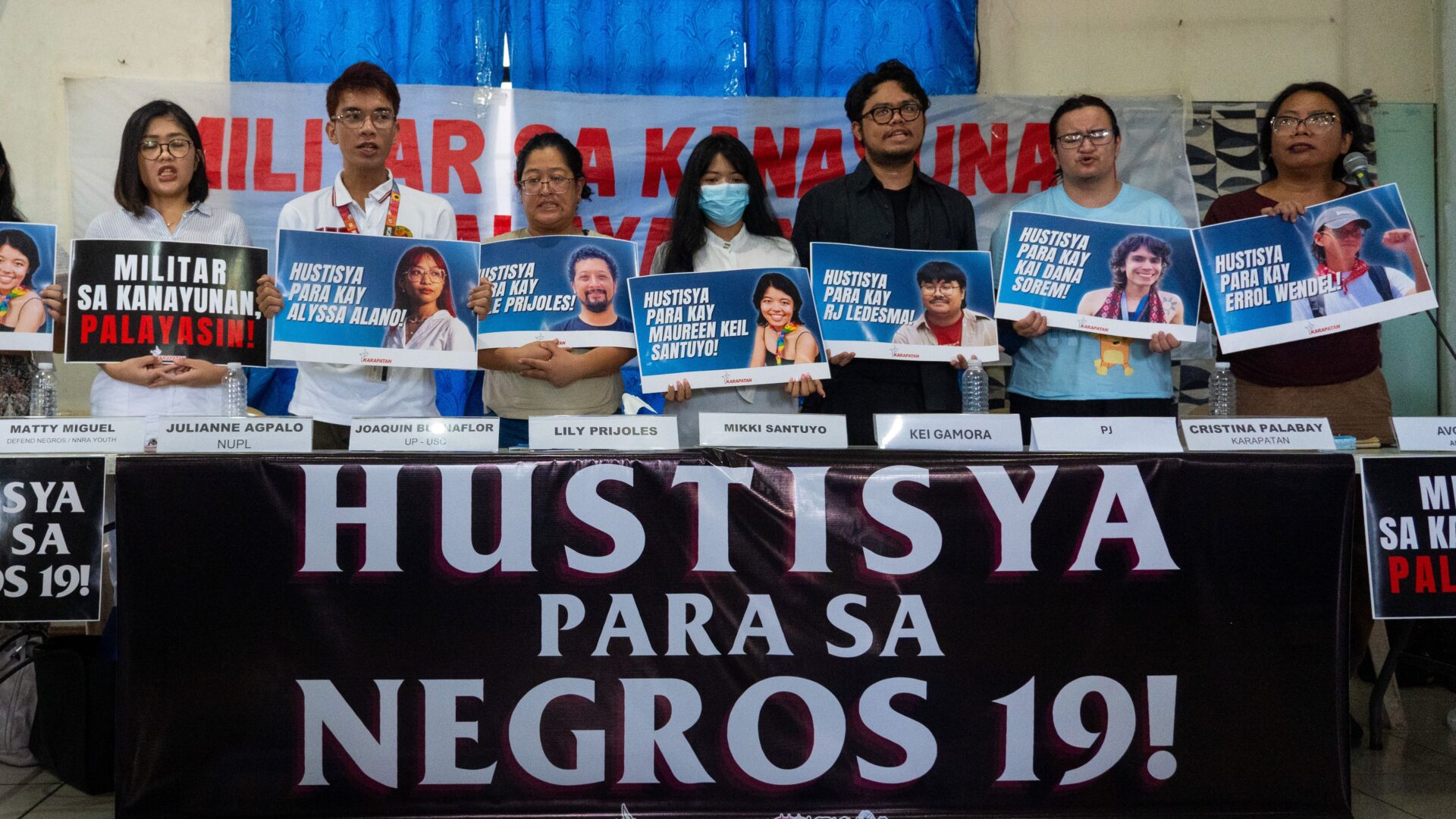
Nanawagan ng hustisya at independyenteng imbestigasyon ang mga kamag-anak at mahal sa buhay ng mga sibilyang aktibista, tanggol-karapatan at mamamahayag na kabilang sa “Toboso 19.”
Tanggal na ang Pilipinas sa listahan ng mga bansa na may malubhang paglabag sa karapatan ng mga bata. Ngunit, ayon sa mga tanggol-bata, hindi naiuulat nang maayos ang mga kaso kaya nagmukhang bumuti ang kalagayan.